Hiding in Plain Sight: Hurt
Hiding in Plain Sight: Hurt
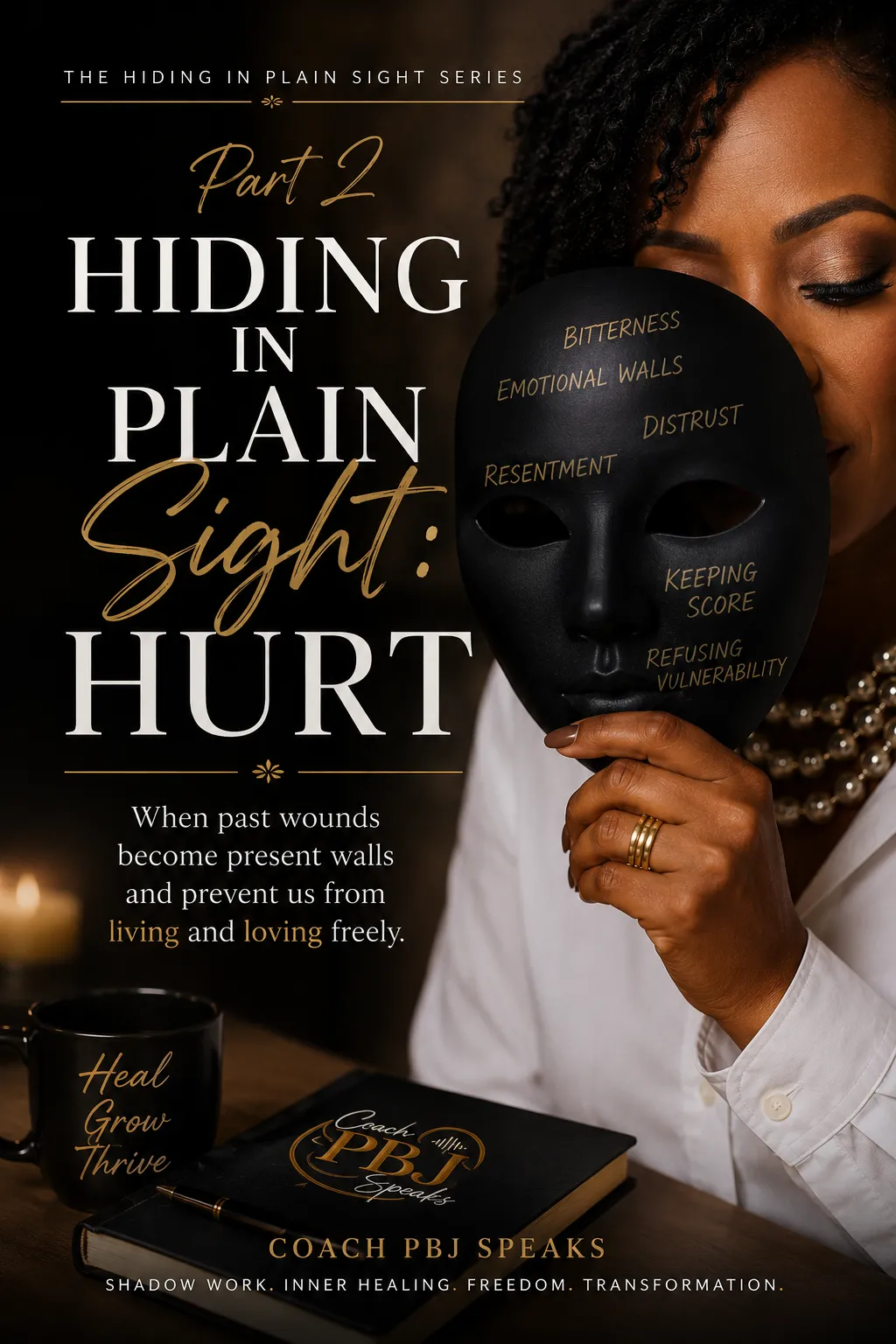
When most people think about hurt, they think about the event that caused it. They think about the betrayal, the rejection, the disappointment, the divorce, the abandonment, the harsh words, or the broken relationship. What we often fail to recognize is that hurt does not always leave when the event is over. Sometimes the relationship ends, the situation changes, or the people move on, but the hurt remains. Over time, it settles into places within us that we no longer notice because we have learned how to function around it.
One of the reasons hurt is so difficult to identify is because it rarely presents itself as hurt. Very few people walk around saying, "I'm operating from a wound." Instead, hurt disguises itself as caution, independence, wisdom, discernment, or self-protection. What started as a response to a painful experience gradually becomes a way of life. We convince ourselves that we have moved on because we are no longer crying about what happened, yet our decisions continue to be influenced by experiences we never fully healed from.
I have noticed that unhealed hurt often changes the way we see people. A woman who was betrayed may struggle to trust even trustworthy people. A woman who was rejected may begin expecting rejection before it ever occurs. A woman who was disappointed repeatedly may stop expecting good things altogether. She is no longer responding to what is happening in the present. She is responding to what happened in the past.
The challenge is that hurt has a way of making emotional walls feel necessary. At first, those walls seem to serve a purpose. They protect us from experiencing the same pain again. They help us feel safe. They create distance between us and potential disappointment. The problem is that walls rarely discriminate. They do not just keep pain out. They also keep connection out. They keep intimacy out. They keep support out. They keep the very things we often desire most from reaching us.
Many women have become so accustomed to carrying hurt that they no longer recognize its influence. It shows up in their inability to receive help. It shows up in their reluctance to trust. It shows up in relationships where they constantly wait for the other shoe to drop. It shows up in friendships where vulnerability feels uncomfortable and risky. It even shows up in opportunities they refuse to pursue because past disappointments have convinced them not to get their hopes up.
What makes hurt particularly deceptive is that much of this behavior can appear reasonable. After all, life has taught many women painful lessons. There are people who have been betrayed. There are people who have been abandoned. There are people who have had their trust violated. The issue is not whether the pain was real. The issue is whether the pain is still controlling the present.
Healing does not require us to deny what happened. It does not require us to pretend the wound never existed. It simply requires us to be honest about the ways the wound may still be shaping our lives. Until we do that, hurt remains hidden in plain sight, influencing our relationships, our choices, and our ability to fully experience the life we desire.
Coach PBJ's Final Thoughts
As I reflect on hurt, I think about how easy it is to mistake survival for healing. Many women become incredibly skilled at functioning while wounded. They go to work. They raise families. They serve in ministry. They build businesses. They smile. They laugh. They show up. From the outside, there is little evidence that anything is wrong.
Yet beneath the surface, there is often a wound that continues to influence how they engage with the world.
One of the lessons I have learned on my own journey is that hurt does not always show up as sadness. Sometimes it shows up as distance. Sometimes it shows up as distrust. Sometimes it shows up as an unwillingness to be vulnerable. Sometimes it shows up as the belief that depending on other people is a mistake.
I have met women who insist they do not need anyone, only to discover that what they really mean is they do not want to be disappointed again. I have met women who call themselves guarded when they are actually wounded. I have met women who describe themselves as cautious when they are really afraid of being hurt one more time.
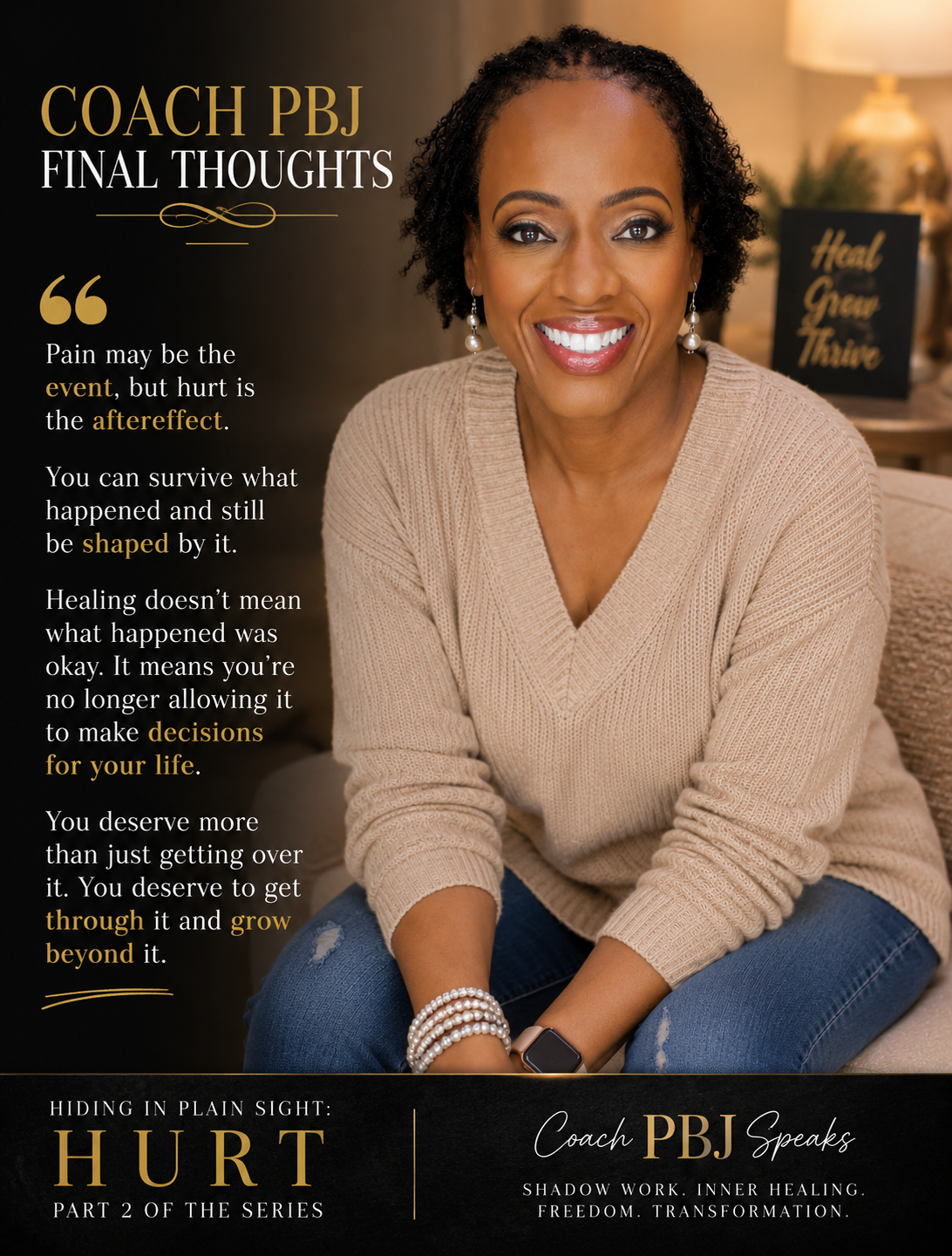
There is a difference between learning from pain and living from pain. One produces wisdom. The other produces walls.
The question is not whether you have been hurt. If you have lived long enough, the answer is probably yes. The question is whether that hurt is still making decisions for you. Is it determining who you trust, how much of yourself you reveal, what opportunities you pursue, or how deeply you allow yourself to connect with others?
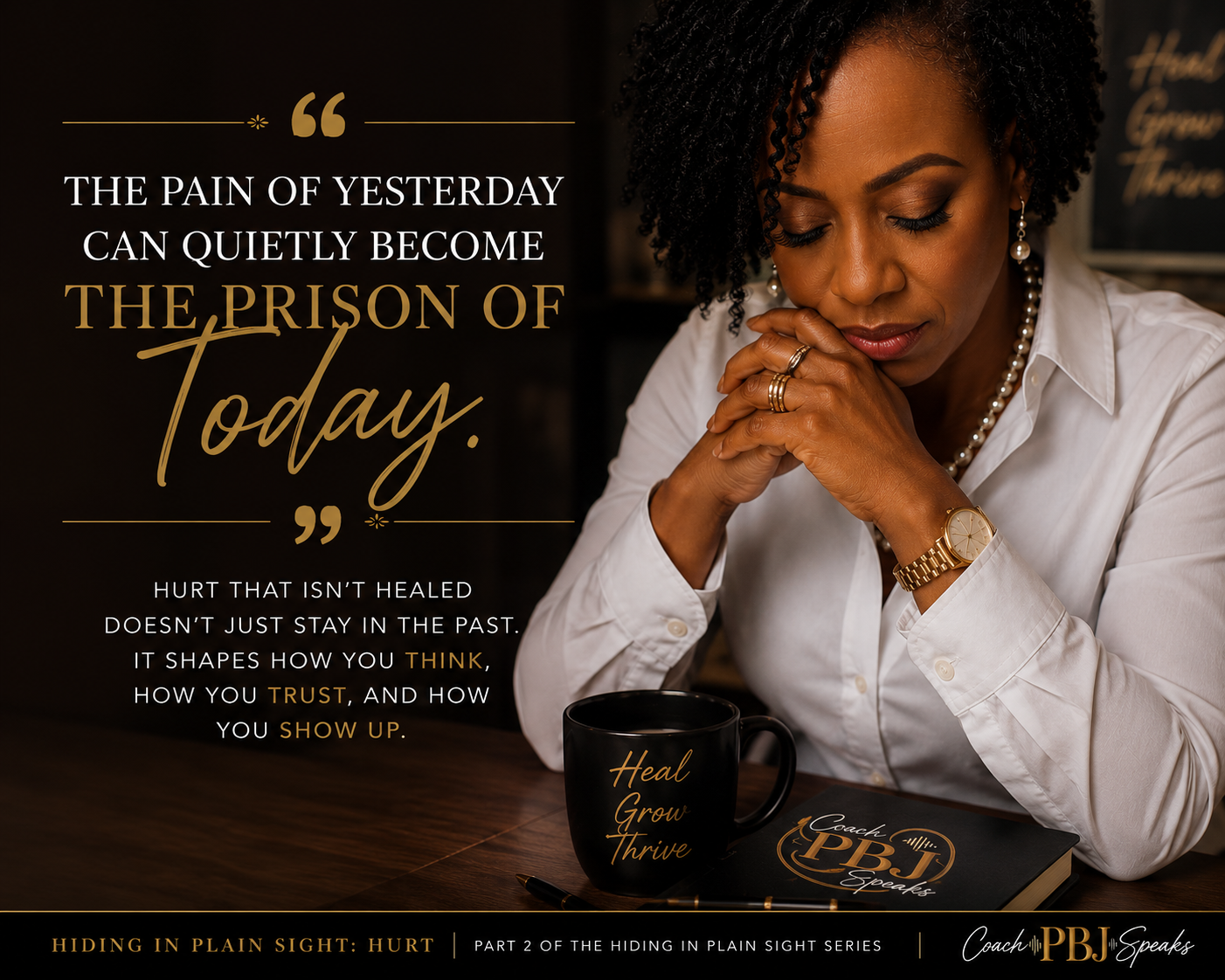
Because if we are not careful, the pain of yesterday can quietly become the prison of today.
Reflection Question
Where in your life have you confused self-protection with healing, and what might be possible if you allowed yourself to heal instead of simply guard the wound?
© Coach PBJ Speaks LLC. All rights reserved. Unauthorized reproduction or distribution is prohibited.