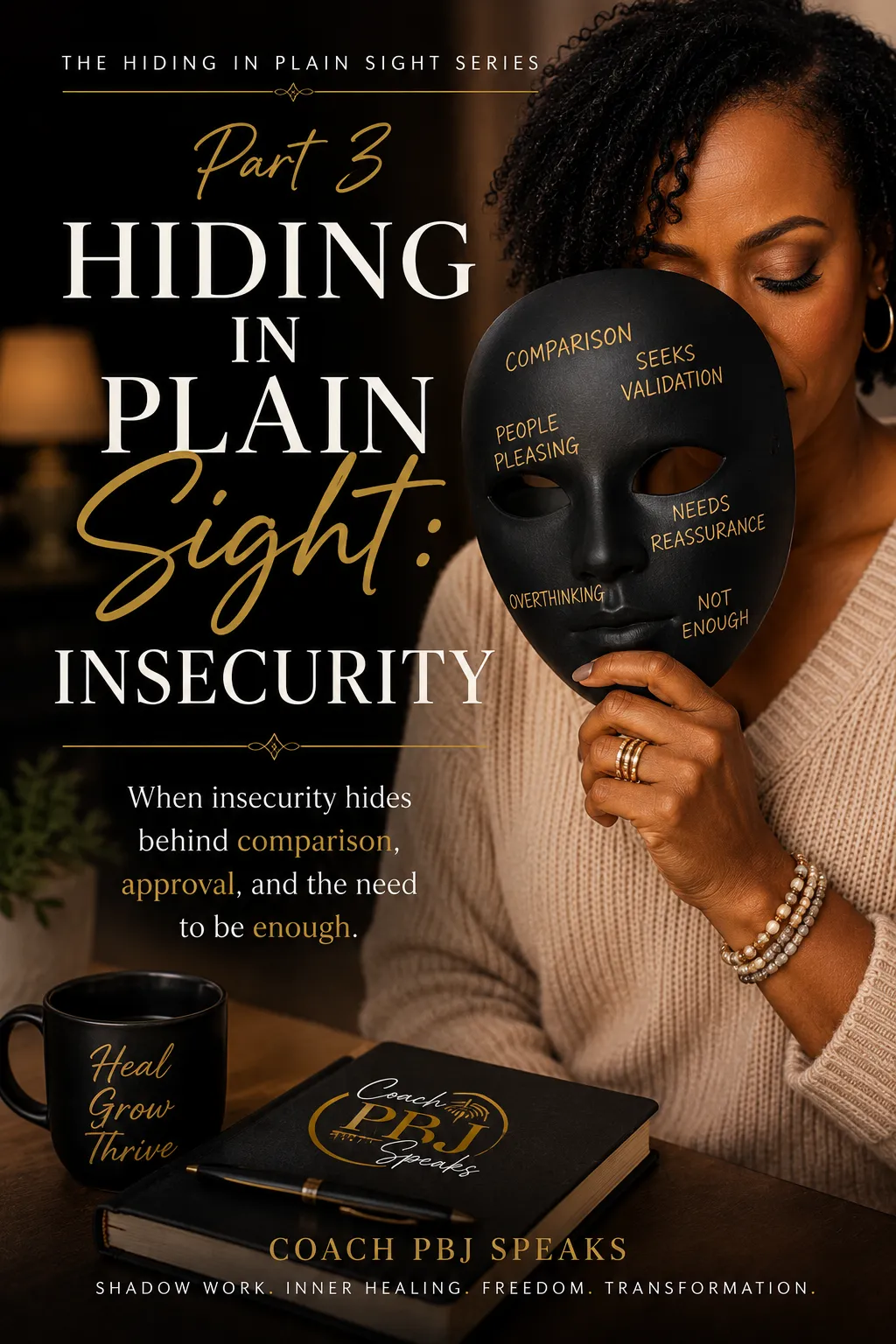
Hiding in Plain Sight: Insecurity
Hiding in Plain Sight: Insecurity
When most people think about insecurity, they picture someone who lacks confidence, avoids attention, and constantly doubts themselves. They imagine a woman who is visibly uncertain and openly struggles with self-esteem. What I have discovered through years of coaching women is that insecurity is often far more subtle than that. In fact, some of the most accomplished, talented, and capable women I know wrestle with insecurity every day.
Like the other shadows, insecurity has learned how to hide in plain sight.
It rarely announces itself by saying, "I don't feel good enough." Instead, it disguises itself as comparison, people-pleasing, perfectionism, overachievement, and the constant need for validation. It shows up in the woman who seeks reassurance before making a decision. It shows up in the woman who changes herself to fit into every room she enters. It shows up in the woman who is more concerned about disappointing others than disappointing herself.
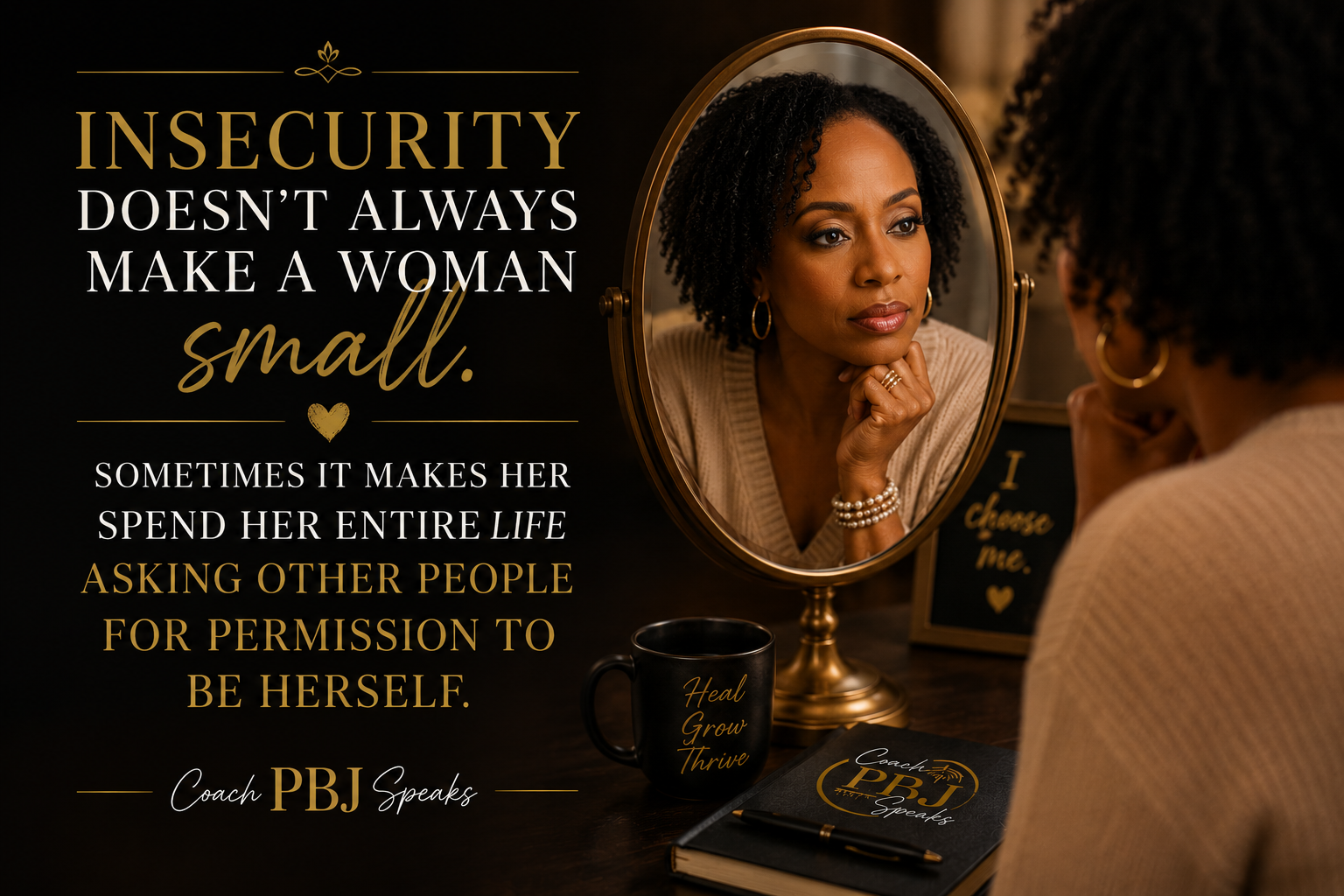
One of the reasons insecurity is so difficult to recognize is because it often wears the mask of humility. Many women have been taught to minimize their accomplishments, downplay their gifts, and avoid appearing too confident. Over time, they become so accustomed to seeking approval from others that they no longer trust their own voice. Instead of asking themselves what they think, they spend their lives wondering what everyone else thinks.
The challenge with insecurity is that it creates a constant need for external confirmation. A compliment can make us feel good for a moment, but the feeling quickly fades. An accomplishment brings temporary confidence, but soon another achievement is needed to maintain it. Approval becomes a drug that requires a larger dose each time. The problem is that no amount of validation from others can permanently fill a void that exists within us.
I have noticed that insecurity often affects relationships between women in ways we do not always acknowledge. It can make another woman's success feel like our failure. It can make us compare our chapter three to someone else's chapter twenty. It can convince us that there is not enough room for everyone to shine. Instead of celebrating another woman's growth, insecurity quietly asks, "What about me?"
The truth is that comparison has never made anyone more confident. It only distracts us from the work of becoming who we were created to be. Every moment spent measuring ourselves against someone else is a moment we are not investing in our own growth. Insecurity thrives when our attention is focused outward instead of inward.
What makes insecurity particularly deceptive is that it can exist even when life appears successful on the outside. A woman may have the career she wanted, the business she dreamed of building, the education she worked hard to obtain, and the respect of those around her. Yet she may still question whether she is enough. She may still wonder whether she belongs. She may still feel the need to prove herself.
That is because insecurity is not rooted in what we have. It is rooted in what we believe about ourselves.
The longer insecurity goes unchallenged, the more power it gains. It begins influencing our decisions, our relationships, our goals, and our willingness to step into new opportunities. It convinces us to play small when we should be growing. It convinces us to stay silent when we should be speaking. It convinces us to seek permission when we should be trusting ourselves.
Healing begins when we stop looking outside ourselves for answers that can only be found within. It begins when we stop allowing other people to define our worth. It begins when we recognize that confidence is not believing we are better than others. Confidence is believing we are enough without comparing ourselves to anyone else.
Coach PBJ's Final Thoughts
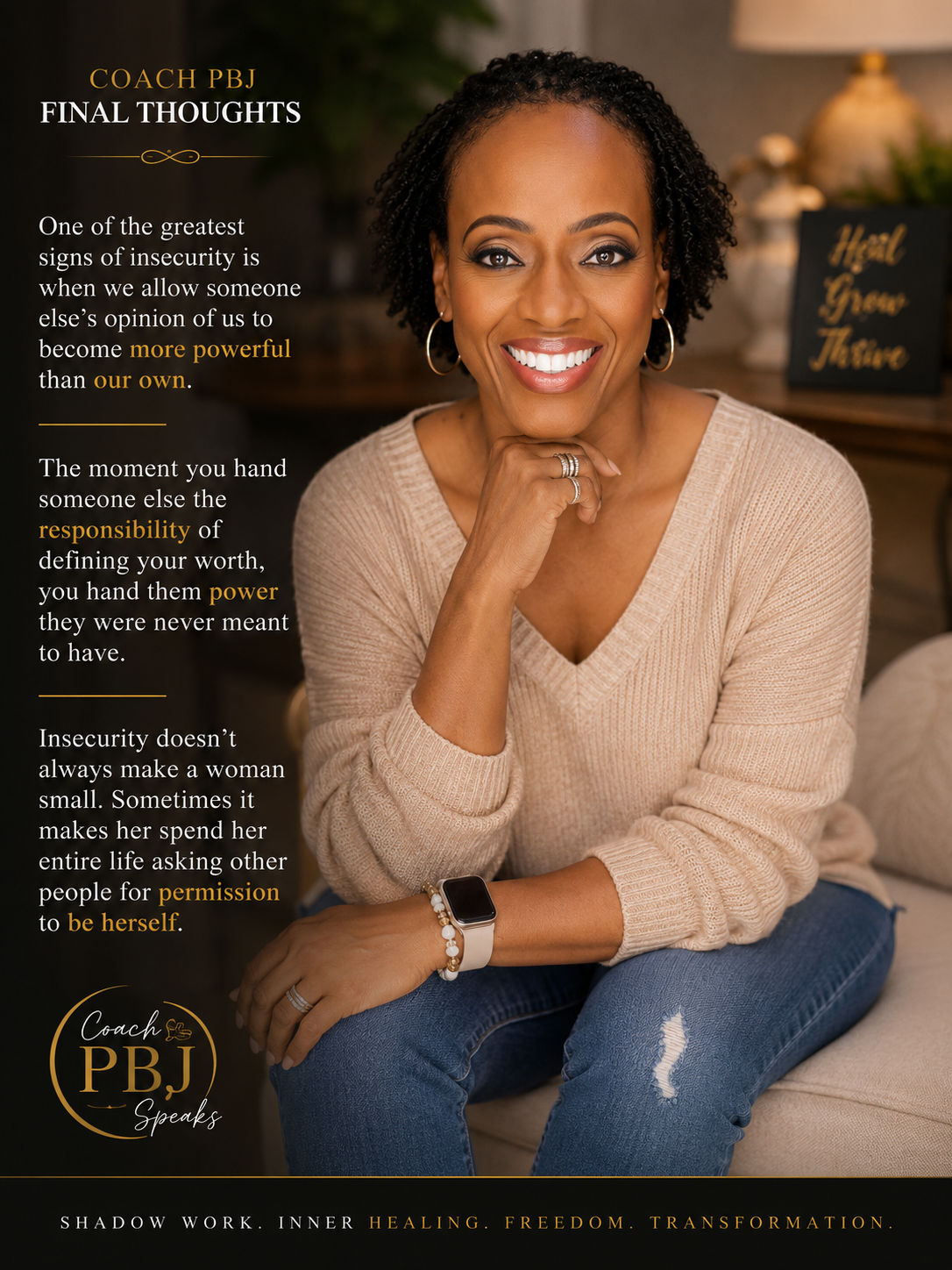
As I reflect on insecurity, I cannot help but think about how many women spend their lives looking for someone else to tell them who they are. They seek validation from parents, spouses, children, friends, employers, pastors, coaches, and even strangers. Somewhere along the way, they begin measuring their worth by the opinions of other people.
The problem with that approach is that people are inconsistent. Their opinions change. Their approval comes and goes. Their perception of us is often influenced by their own experiences, wounds, and limitations. When we build our confidence on something that unstable, we find ourselves constantly questioning who we are.
One of the greatest lessons I have learned is that insecurity grows wherever self-awareness is absent. When we do not know who we are, we become vulnerable to every opinion, every criticism, and every comparison. We begin looking to others for answers that we should be discovering for ourselves.
I have met women who were extraordinarily gifted but spent years shrinking themselves to make other people comfortable. I have met women who delayed pursuing their dreams because they were waiting for someone's approval. I have met women who could tell me exactly what everyone else expected of them but struggled to tell me what they wanted for themselves.
The moment you hand someone else the responsibility of defining your worth, you hand them power they were never meant to have.
One of the reasons I am so passionate about helping women do their inner work is because I have seen what happens when a woman finally becomes secure in who she is. She stops competing. She stops comparing. She stops performing for approval. She stops apologizing for taking up space. She begins showing up authentically because she no longer needs someone else's permission to be herself.
The question is not whether insecurity exists. Most of us have wrestled with it at some point. The question is whether it is still influencing the way you live today.
Because if you are not careful, insecurity will keep you asking the world for permission to become the woman God already created you to be.
Reflection Question
Where in your life are you seeking validation from others when you should be learning to trust yourself?
© Coach PBJ Speaks LLC. All rights reserved. Unauthorized reproduction or distribution is prohibited.