Orpah Went Back
Orpah Went Back: The Shadow of Fear, Familiarity, and Letting Go of What Could Have Been
Sometimes the hardest part of healing is walking away from what feels familiar, even when familiar is painful.
Orpah is one of the women in the Bible people rarely talk about, yet her story speaks volumes.
Most people remember Ruth because Ruth stayed. Before Ruth stayed, Orpah left. I think many people judge Orpah too quickly without considering the emotional weight of her decision.
In Ruth 1, Naomi had lost her husband and both of her sons. Ruth and Orpah, her daughters in law, were also widows. Their future felt uncertain, painful, and unstable. Naomi decided to return to Bethlehem, then encouraged both women to go back to their families and their homeland.
At first, both women refused.

Ruth 1:10 says they both told Naomi, “Surely we will return with you to your people.”
After Naomi continued describing the difficulty ahead, Orpah kissed Naomi goodbye and returned home, while Ruth stayed.
That moment may seem small, but emotionally it is very deep.
Orpah’s decision reflects something many people wrestle with every day.
The pull of familiarity.
The fear of uncertainty.
The comfort of returning to what feels known, even when known is connected to limitation, pain, fear, or stagnation.
Many of us have had “Orpah moments.” Moments where we stood between what was familiar and what was possible. Moments where we had to decide whether to stay where we felt emotionally comfortable or move toward something uncertain that required faith, growth, healing, or transformation.
Sometimes people go back because uncertainty can feel terrifying.
Healing is unfamiliar for many people. Peace is unfamiliar for many people. Healthy relationships, rest, freedom, and wholeness can feel unfamiliar when survival has been the pattern for so long.
Sometimes people return to familiar pain simply because they know how to survive there.
That is why Orpah’s story matters.
Many people are emotionally standing at a crossroads right now. Part of them wants healing. Part of them wants growth. Part of them wants more. Yet another part feels safer returning to old habits, old environments, old relationships, old mindsets, old patterns, or old versions of themselves.
That creates shadows.
The shadow of fear.
The shadow of self doubt.
The shadow of emotional retreat.
The shadow of staying small.
The shadow of believing the unknown is more dangerous than remaining stuck.
One of the hardest things about growth is that transformation usually requires leaving something behind.
Sometimes it requires leaving old thinking behind. Sometimes it requires leaving survival patterns behind. Sometimes it requires leaving environments that no longer align with who you are becoming. Sometimes it even requires grieving the version of yourself that learned how to survive in unhealthy places.
Orpah reminds us that not everybody is ready to move forward when the opportunity appears.
Fear has a way of making people retreat toward what feels predictable.
Ruth 1:14 says, “Then they lifted up their voices and wept again; and Orpah kissed her mother in law, but Ruth clung to her.”
That tells me Orpah’s decision was emotional. This was not cold hearted indifference. This was someone wrestling with loss, uncertainty, grief, and fear.
Many people understand that feeling deeply.
Growth sounds beautiful until it requires risk.
Healing sounds beautiful until it requires honesty.
Transformation sounds beautiful until it asks us to release what once felt safe.
Orpah’s story forces us to ask a deeper question:
What keeps pulling me backward emotionally?
Sometimes the greatest obstacle to healing is not the wound itself. Sometimes it is familiarity.
People can become so accustomed to survival that healing feels uncomfortable. Chaos can feel normal. Dysfunction can feel familiar. Settling can feel safer than becoming.
Orpah shows us how easy it is to turn back when fear becomes louder than faith.
Coach PBJ Final Thoughts

I think many people carry Orpah’s shadow without realizing it.
They want healing, but keep returning to what hurts them. They want peace, but keep reconnecting with chaos. They want growth, but keep shrinking themselves to fit familiar environments.
I understand it.
Growth requires courage.
There are seasons where we stand emotionally between who we were and who we could become. That space can feel uncomfortable, lonely, uncertain, and unfamiliar.
But remaining emotionally stuck just because something feels familiar can quietly delay healing for years. Orpah’s story is not about condemnation. It is about awareness. It is about recognizing the moments fear tempted us to return to places, patterns, relationships, or versions of ourselves we had already outgrown.
Before we can truly shine, we have to be honest about what keeps pulling us backward.
Maybe the real question this blog leaves us with is this:
What am I afraid will happen if I fully move forward?
Awareness is often the first step toward healing.
Call to Action

If Orpah’s story resonated with you, take a moment today to reflect honestly. What familiar thing have you struggled to release even though you know it no longer aligns with who you are becoming? As we continue this journey through the women of the Bible and the shadows they carried, pay attention to the stories that feel deeply personal. When you are ready to stop circling familiar pain and begin your own journey from shadows to shine, I invite you to join the SHIFT Community.
From shadows to shine.
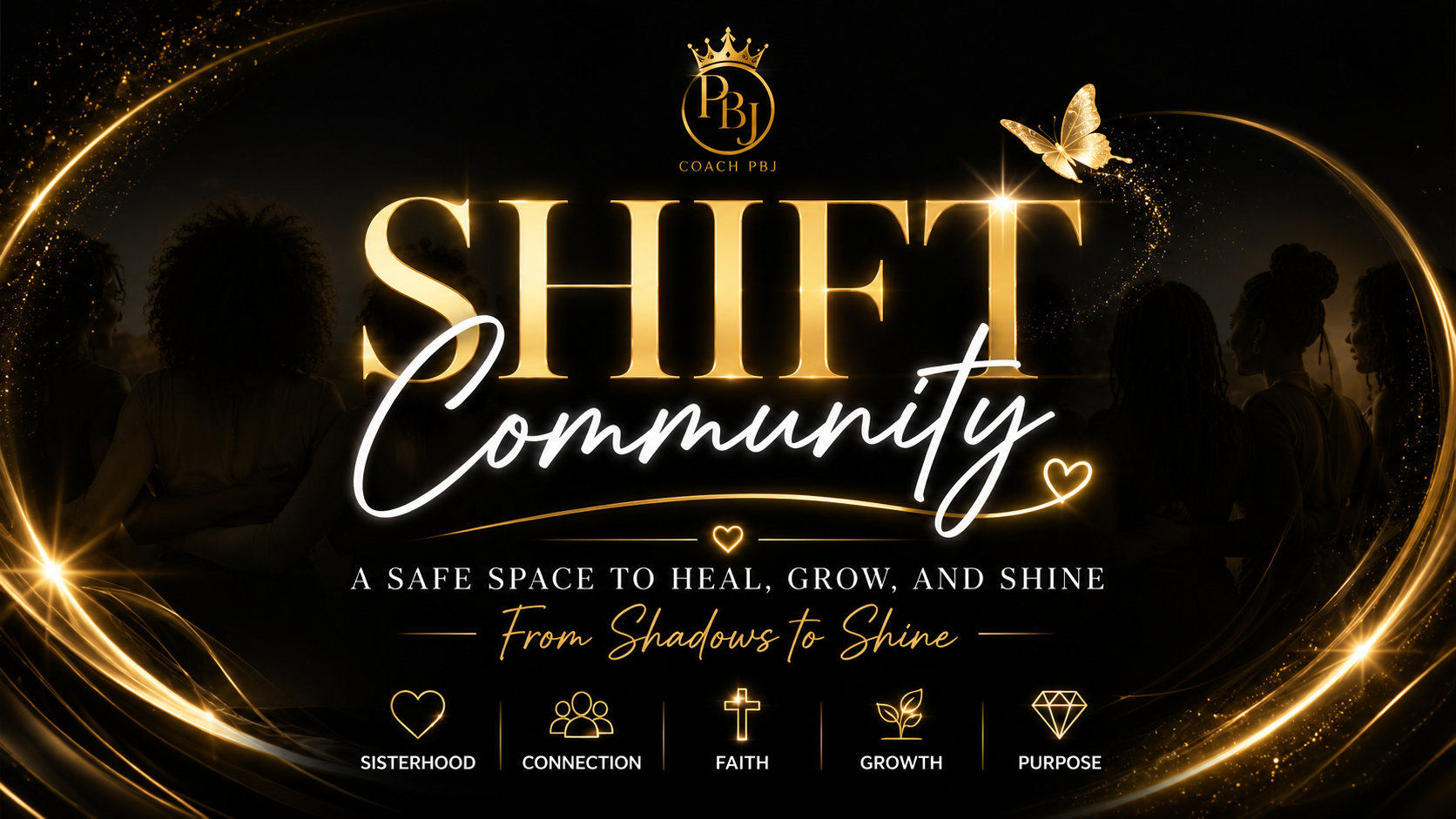
Join the SHIFT Community and begin your journey from shadows to shine.
From shadows to shine.
Copyright © 2026 Paula Burch Jackson, Coach PBJ Speaks. All rights reserved. This content may not be copied, reproduced, republished, or used without written permission.