
The Smile Is Real, But So Is the Struggle
The Smile Is Real, But So Is the Struggle
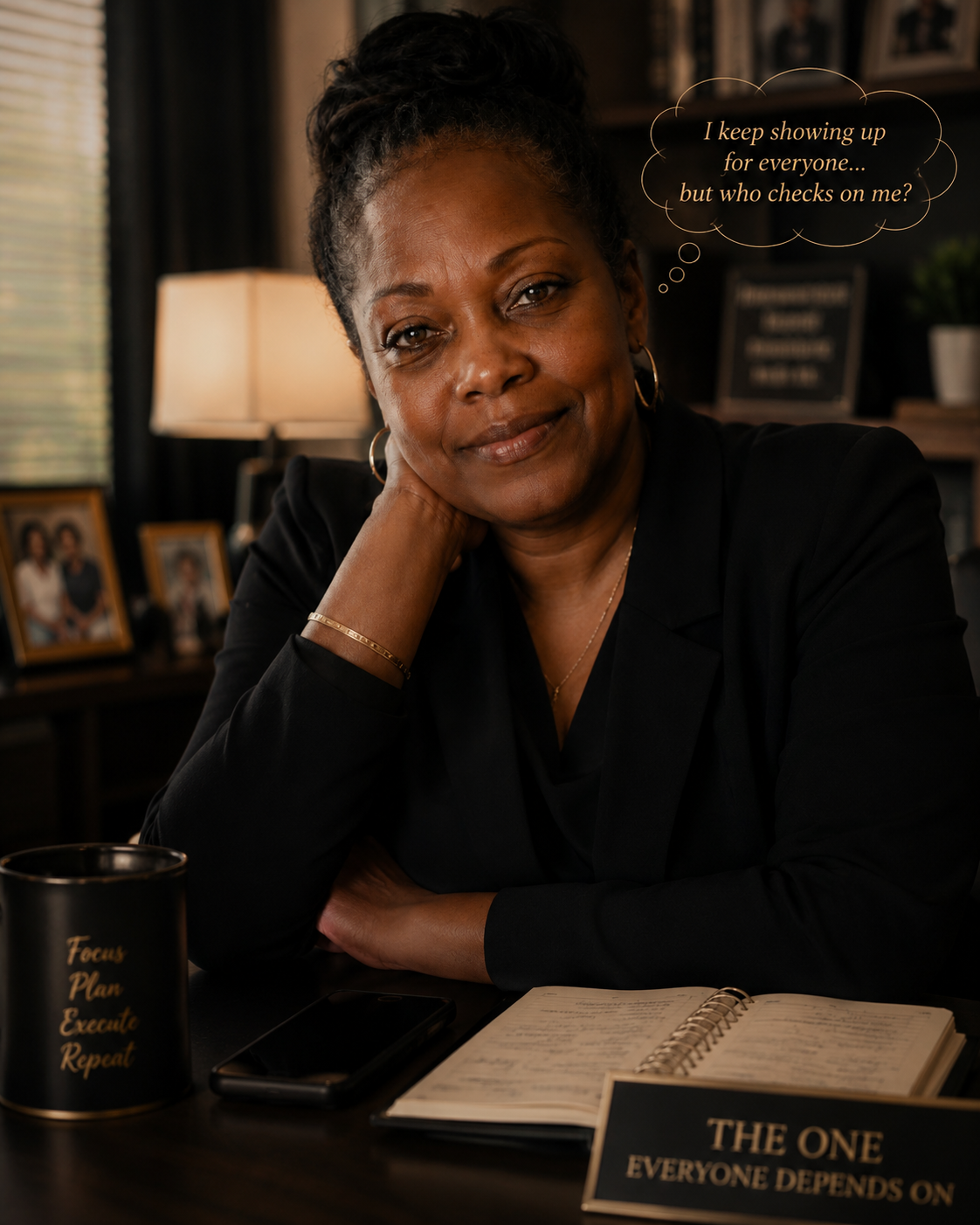
In my last blog, we talked about the lies we tell behind the smile. We talked about the phrases many high functioning women use when they are trying to hold everything together. “I’m fine.” “I’m just tired.” “I don’t need anything.” “I can handle it.” “I’m good.” “I’m blessed and highly favored.”
And while those words may be true, they can also become hiding places when we use them to avoid being honest about what is really happening inside.
In this blog, I want to go a little deeper. Because the smile may be real, but so is the struggle.
We live in a world that wants people to be one thing at a time. Either you are strong or you are struggling. Either you are blessed or you are burdened. Either you have faith or you are afraid. Either you are grateful or you are grieving.
But real life is not that simple.
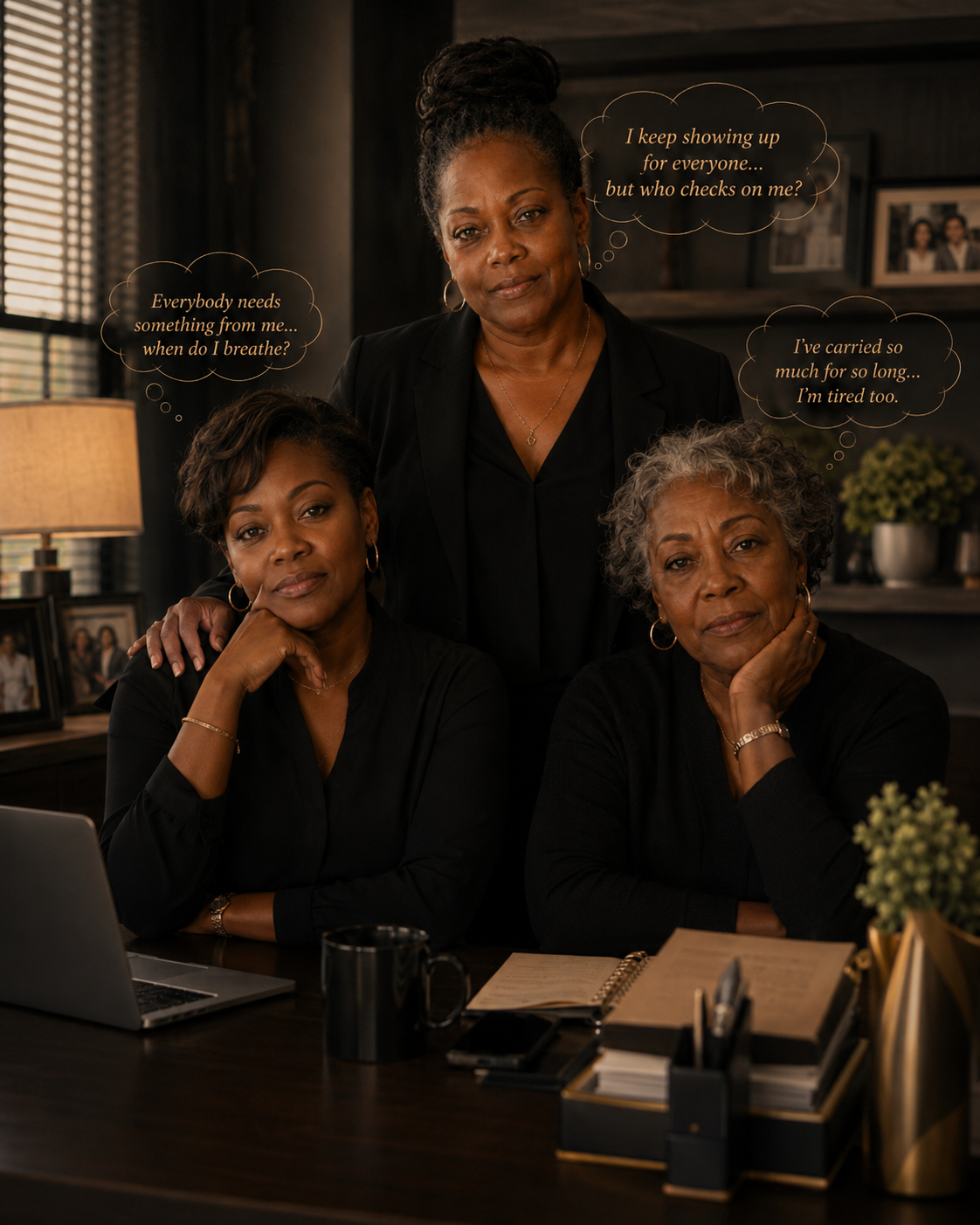
You can be thankful and tired at the same time. You can be faithful and frustrated at the same time. You can love God and still feel overwhelmed. You can be an encourager and still need encouragement. You can be the one everybody calls and still wish you had someone safe enough to call.
That does not make you weak. That makes you human.
When Strength Becomes Expected
Many women have been taught to minimize their pain because they do not want to appear ungrateful. They do not want people to think they are complaining. They do not want to be seen as negative. They do not want to make anyone uncomfortable. So instead of saying what they really feel, they smile through it.
They smile through disappointment. They smile through exhaustion. They smile through grief. They smile through betrayal. They smile through loneliness. They smile through fear. They smile through the pressure of being everything to everybody while trying not to fall apart themselves.
And over time, the smile becomes expected.
People get used to the smiling version of you. They get used to the strong version of you. They get used to the one who always finds a way. They get used to the one who always figures it out. They get used to the one who can take the hit, carry the load, wipe the tears, fix the problem, and still show up looking like nothing happened.

But here is the danger.
When people get used to your strength, they may forget to check on your softness. When people get used to your smile, they may forget you have a story. When people get used to you showing up, they may forget you need support too.
And if you are not careful, you will start forgetting too.
You will forget that you are allowed to rest. You will forget that you are allowed to need help. You will forget that you are allowed to say, “This is too much.” You will forget that you are not just here to be useful. You are here to be whole.
What Is Beneath the Smile?
That is where shadow work becomes so important. Shadow work helps us look beneath the smile and ask, “What am I really carrying?” It helps us stop performing strength long enough to examine the pain behind the pattern. It helps us stop judging ourselves for how we learned to survive and start understanding why we show up the way we do.
Sometimes the smile is connected to shame.
Shame says, “Do not let them see you struggling.” Shame says, “You should be further along by now.” Shame says, “You are supposed to have this together.” Shame tells you to hide the parts of yourself that need compassion the most.
Sometimes the smile is connected to hurt.
Hurt says, “The last time you opened up, they did not handle your heart with care.” Hurt says, “Keep it to yourself.” Hurt says, “Do not give people access to what they may use against you later.” So the smile becomes a shield.
Sometimes the smile is connected to insecurity.
Insecurity says, “If they see the real you, they may not value you the same.” Insecurity says, “You have to keep being useful.” Insecurity says, “Your worth is tied to how much you can give, fix, do, and carry.”
Sometimes the smile is connected to fear.
Fear says, “If you tell the truth, people may leave.” Fear says, “If you stop being strong, everything may fall apart.” Fear says, “If you ask for help, you may be disappointed again.” So instead of reaching out, you retreat behind a smile.
And sometimes the smile is connected to trauma.
Trauma says, “Stay in control.” Trauma says, “Do not be too vulnerable.” Trauma says, “Read the room, manage the energy, and make sure everybody else is okay so you can feel safe.” Trauma can teach a woman how to function beautifully while quietly disconnecting from what she actually feels.
That is why we cannot just celebrate the smile without caring about the soul behind it.
Because some women are not just smiling from joy. Some women are smiling from conditioning. Some women are smiling from survival. Some women are smiling because they learned early that their pain made people uncomfortable, but their smile made everybody feel safe.
The Smile Is Not the Problem
I want to say this clearly. Your smile is not the problem.
The problem is when the smile becomes the place where your pain goes to disappear. The problem is when your laughter becomes a cover for your loneliness. The problem is when your strength becomes the reason nobody knows you are struggling. The problem is when your faith language becomes a way to silence your emotional truth.
You can still smile. You can still laugh. You can still encourage. You can still be grateful. You can still believe God.
But you can also be honest.
Honesty is not the enemy of faith. Honesty is often the doorway to healing.
There is power in saying, “I am blessed, but I am tired.” There is freedom in saying, “I love God, but I am struggling.” There is healing in saying, “I am grateful, but this still hurts.” There is wisdom in saying, “I have been strong, but I need support.” There is courage in saying, “I am not okay today, and I do not want to keep pretending that I am.”
That kind of truth does not weaken your witness. It deepens it.
People do not just need to see the polished version of your faith. Sometimes they need to see the honest version. They need to know that healing is not always pretty. They need to know that transformation is not always instant. They need to know that being chosen by God does not mean you never get weary. It means you do not have to carry weariness alone.
The Invitation to Stop Hiding
For the woman reading this who has been hiding behind the smile, I want you to hear me. You deserve more than survival. You deserve more than functioning. You deserve more than being praised for carrying what is quietly breaking you.
You deserve healing. You deserve support. You deserve safe spaces. You deserve to be seen beyond what you produce, beyond what you carry, beyond what you fix, and beyond how well you smile through it.
So maybe the invitation today is not to stop smiling. Maybe the invitation is to stop hiding.
Maybe the invitation is to let your smile be honest again.
A smile that does not have to cover pain. A smile that does not have to prove strength. A smile that does not have to convince everybody that you are okay. A smile that can exist alongside truth.
Because yes, the smile may be real. But the struggle is real too.
And when you finally give yourself permission to acknowledge both, something begins to shift. You stop living divided. You stop making your public image fight with your private reality. You stop forcing the strong version of you to silence the hurting version of you. You stop pretending wholeness and begin practicing it.
That is what it means to move from shadows to shine.
It is not about denying the struggle. It is about bringing the struggle into the light so it no longer has to control you from the dark. It is about recognizing the shadows that shaped your responses, your patterns, your silence, your overgiving, your overfunctioning, and your need to appear okay.
It is about chasing the root, facing the truth, and embracing the healing that comes when you stop hiding from yourself.
The smile can stay. But the mask has to go.
The joy can stay. But the performance has to go.
The faith can stay. But the silence that keeps you suffering has to go.
Because you were not created to simply look okay. You were created to be whole.
Coach PBJ Final Thoughts

Before you move on from this moment, ask yourself this: Where have I been smiling, but silently struggling? What truth have I been afraid to say out loud? What phrase do I use the most when I am trying to hide what I really feel?
Is it “I’m fine”? Is it “I’m good”? Is it “I can handle it”? Is it “I’ll figure it out”? Or is it “I’m blessed and highly favored”?
Now ask yourself this deeper question: Am I using those words to express truth, or am I using them to avoid truth?
Because there is a difference.
Awareness is where healing begins.
So check on the woman who is always smiling. Check on the friend who laughs the loudest. Check on the one who always says she is okay. But also, check on yourself.
Check on the version of you that keeps showing up for everybody else while quietly disappearing from herself. Check on the version of you that keeps carrying the weight because she does not want to disappoint anyone. Check on the version of you that learned to smile before she learned how to speak her truth.
And when you find her, do not shame her. Sit with her. Listen to her. Love her. Remind her that she does not have to lie anymore.
The smile is real. The struggle is real. But healing can be real too.

Ready to stop carrying what you were never meant to keep?
Join the SHIFT Community and begin your journey from shadows to shine. This is a safe space for high-functioning women who are ready to uncover hidden shadows, reclaim their identity, renew their mindset, and walk boldly in purpose
Because the smile may be real, but healing needs the truth.