The Shame We Did Not Know We Were Carrying
The Shame We Did Not Know We Were Carrying
By Dr. Paula Burch Jackson | Coach PBJ Speaks
Some of us have spent so much of our lives surviving that we never stopped long enough to ask:
“Who taught us to see ourselves this way?”
Who taught us that our natural hair was “too much”?
Who taught us that being emotional made us weak?
Who taught us that resting meant laziness?
Who taught us that strength meant suffering in silence?
Who taught us that asking for help meant failure?
Who taught us that our bodies, our skin, our voices, our stories, our age, our softness, our ambition, or our emotions had to be reduced in order to be accepted?
We were not born believing we were too much. Somewhere along the way, that message was planted. Sometimes through words. Sometimes through rejection. Sometimes through silence. Sometimes through systems that rewarded us for shrinking. Sometimes through environments where survival became more important than authenticity.
And because of that, we learned how to carry shame we never consciously chose.
Shame planted through family systems.
Shame planted through culture.
Shame planted through relationships.
Shame planted through church hurt.
Shame planted through rejection, comparison, racism, sexism, abandonment, survival mode, and years of being praised for endurance while silently falling apart.
That is the dangerous thing about shame. It does not always announce itself.
Sometimes it hides behind responsibility.
Sometimes it hides behind perfection.
Sometimes it hides behind strength.
Sometimes it hides behind silence.
Sometimes it hides behind “I’m fine.”
And sometimes, shame becomes so familiar that we do not even recognize it as shame anymore. We simply call it our personality.
When Oppression Becomes Internal
Some of the shame we carry is personal.
But some of it is also cultural, generational, and systemic.
That is where internalized oppression comes in.
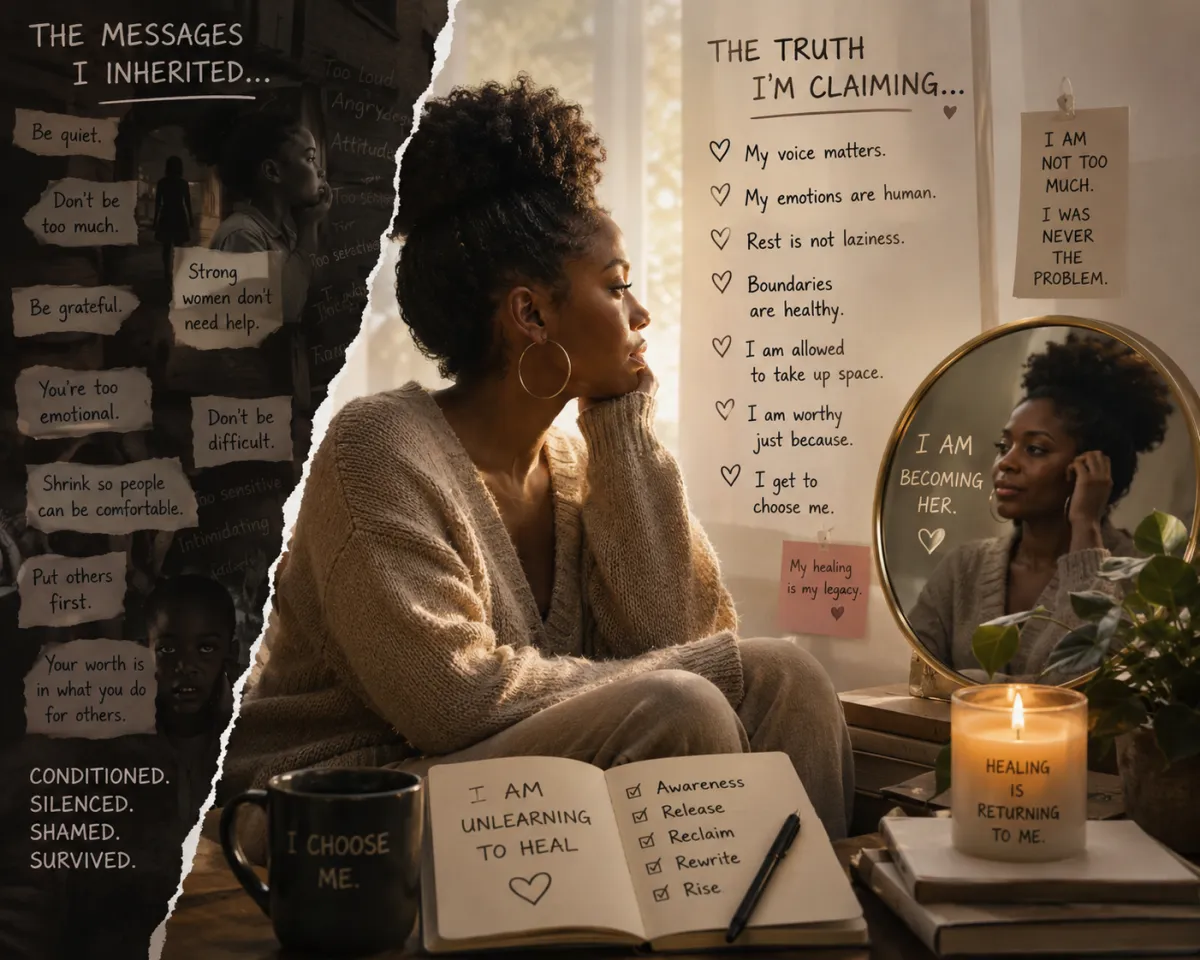
Internalized oppression happens when repeated societal messages become internal beliefs. It is when stereotypes, labels, criticism, and cultural conditioning become so normalized that we begin seeing ourselves through distorted lenses.
Not because the labels are true.
But because they were repeated long enough to feel true.
And when something is spoken over us again and again, we may eventually start carrying it as though it belongs to us.
So little girls grow into women constantly monitoring their tone, their emotions, their reactions, their bodies, their hair, their language, their strength, their intelligence, their confidence, and even their pain.
We learned early:
“If we cry, we are emotional.”
“If we speak up, we are difficult.”
“If we lead strongly, we are aggressive.”
“If we set boundaries, we are angry.”
“If we advocate for ourselves, we are intimidating.”
For Black women, this weight has often come with labels that were never fair and never innocent.
Angry.
Too loud.
Too emotional.
Too opinionated.
Too aggressive.
Too strong.
Too much.
And after a while, those labels can make us start managing ourselves before we even enter the room.
So we soften our tone.
We monitor facial expressions.
We suppress frustration.
We change our language or vocabulary.
We avoid appearing too emotional.
We avoid appearing too confident.
We smile when we are uncomfortable.
We overperform professionalism.
We dim parts of our personality to fit the room.
We learn not to question authority, even when something inside us knows a question needs to be asked.
And here is what makes it so heavy. The world may call it professionalism. The workplace may call it emotional intelligence. The culture may call it knowing how to act. But sometimes what is really happening is this:
We are being trained to survive rooms that were never designed to honor the fullness of who we are.
The Conditioning Starts Early
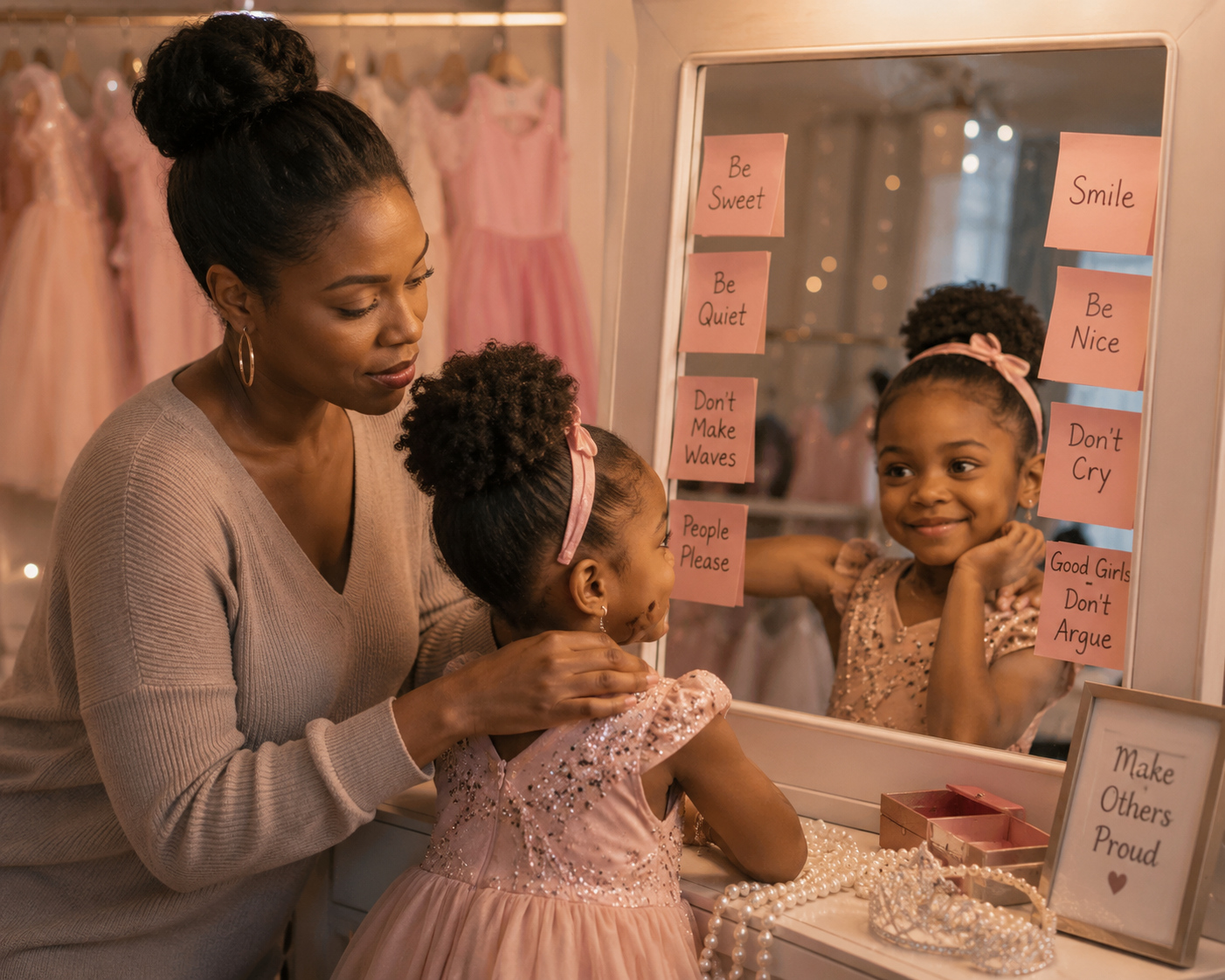
Long before we ever learned the phrase internalized oppression, we learned how to monitor ourselves for acceptance. We learned how to read rooms. Shrink emotions. Adjust behavior. Protect other people’s comfort. And survive environments where authenticity did not always feel safe. Because internalized oppression does not usually begin in adulthood. It often begins in childhood.
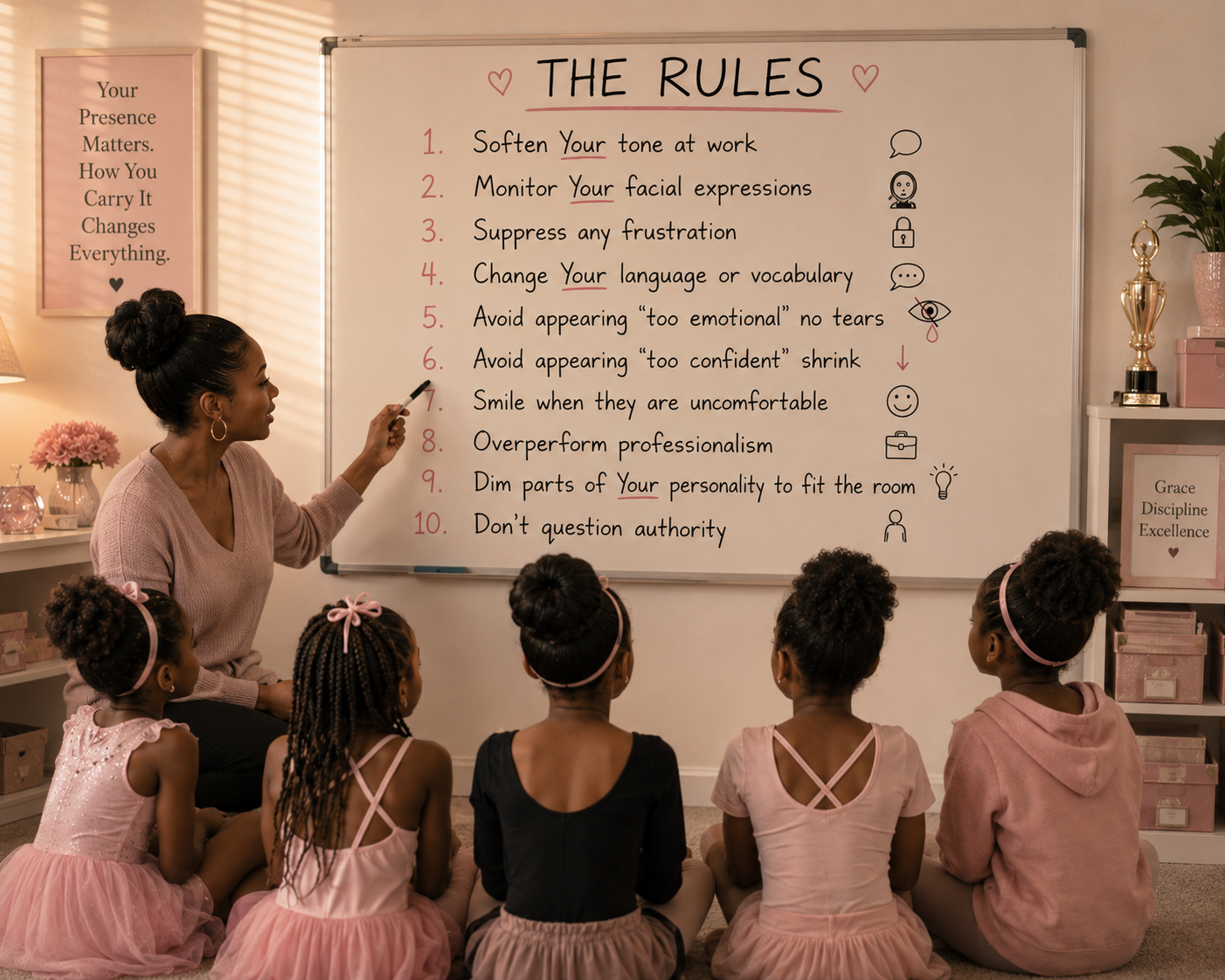
Some girls were taught:
·Good girls do not make waves.
·Strong women do not cry.
·Nice women do not speak too loudly.
·Successful women should still make everyone else comfortable.
·Respect means silence.
·Confidence must be softened.
·Pain must be hidden.
And slowly, without even realizing it, performance began replacing authenticity. We became skilled at showing people the version of us they could handle. But the version they could handle was not always the version God created.
The Exhaustion of Code Switching
Some of us have also mastered something called code switching without realizing how exhausting it is.

Code switching is the act of adjusting the way we speak, behave, express emotion, communicate, dress, or present ourselves depending on the environment we are in so we can feel accepted, safe, respected, or less judged.
It is constantly calculating:
“How should we show up here?”
“What version of ourselves feels safest in this room?”
“How do we avoid being stereotyped, dismissed, misunderstood, or labeled?”
It is the quiet labor of editing ourselves before anyone else gets the chance to reject us. And while adjustment can sometimes be wisdom, constant self-editing can become a wound. Because when we spend too much time managing perception, we can slowly lose connection with authenticity.
We start wondering:
“Is this who I really am?” Or is this who I became so I would not be misunderstood?
Is this my personality? Or is this my protection?
Is this wisdom? Or is this fear wearing the mask of wisdom?
Over time, it becomes difficult to know where authenticity ends and survival begins.
When Survival Starts Feeling Like Personality
And this is where the danger deepens. When shame becomes internalized, we often mistake it for personality.
So the woman who struggles to rest says: “That’s just how I am.”
The woman who overperforms says: “I just like helping people.”
The woman who never speaks up says: “I don’t like conflict.”
The woman who keeps choosing emotionally unavailable people says: “I’m just patient.”
The woman who keeps carrying everybody says: “I’m just strong.”
The woman who never asks for help says: “I don’t want to bother anybody.”
But sometimes those behaviors are not personality traits, they are survival adaptations born from hidden shame. Sometimes what we call strength is really fear of falling apart. Sometimes what we call patience is really fear of abandonment. Sometimes what we call independence is really the memory of not being able to depend on anyone. Sometimes what we call peacekeeping is really the fear of being rejected for telling the truth.
That is why shadow work matters.
Because we cannot heal what we keep misnaming.
If we call everything personality, we may never uncover the pain underneath the pattern. If we call everything strength, we may never admit how tired we are. If we call everything wisdom, we may never recognize where fear has been leading.
The Beliefs Beneath the Behavior

Too often, we try to change behavior without ever uncovering the belief underneath it. But behind many patterns are hidden beliefs like:
“I must earn love.”
“I must prove my worth.”
“I must carry everything.”
“I cannot disappoint people.”
“I cannot be fully myself.”
“I must stay small to stay accepted.”
“I must be needed to be valued.”
“I must not make people uncomfortable.”
“I must be strong, even when I am breaking.”
And over time, those beliefs become emotional prisons. This is especially true for the woman who became “the strong one.” The dependable one. The fixer. The peacemaker. The caretaker. The overachiever. The woman everybody calls while nobody checks on her. The woman who can hold a room together while falling apart in private. The woman who can encourage everybody else while silently wondering who will encourage her.
Strong women were not always taught how to process pain. We were often taught how to function through it. So, we mastered survival while secretly carrying shame we did not even realize was there.
When Pressure Becomes a Pattern
Over time, the pressure to constantly adjust does more than make us tired.
It creates patterns.
A pattern of shrinking before speaking.
A pattern of smiling through discomfort.
A pattern of overexplaining simple truths.
A pattern of carrying pain quietly so nobody labels us angry, emotional, difficult, or too much.
A pattern of proving we are safe enough, kind enough, calm enough, strong enough, professional enough, spiritual enough, and acceptable enough.
And that is where shadows begin to form. Not all at once. Little by little.
Shame says: “Maybe something is wrong with me.”
Hurt says: “Maybe it is safer not to expect anyone to understand.”
Insecurity says: “Maybe I am not enough as I am.”
Fear says: “Maybe I need to keep managing how people see me in order to be accepted.”
Trauma says: “Maybe I should stay prepared for rejection, even when I am in a safe place.”
And before we know it, we are not just living our lives. We are performing for acceptance. We are editing for safety. We are shrinking for belonging. We are surviving in places where we were meant to shine.
The Questions That Lead Us Back to Truth
Healing begins when we stop asking:
“What is wrong with us?” And start asking:
“What happened to us?”
“What messages did we internalize?”
“What beliefs have been shaping our lives from the shadows?”
“What parts of us did we silence in order to be accepted?”
“What labels did we carry that were never ours?”
“What version of us existed before the world taught us to shrink?”
Because some of the heaviest burdens we carry are not physical. They are invisible beliefs about our worth. And one of the greatest acts of healing is refusing to keep carrying shame that never belonged to us in the first place.
This is where shadow work becomes sacred. Not because it makes us dwell in pain. But because it helps us tell the truth about what pain tried to make us believe.
Shadow work invites us to chase the root.
Face the truth.
Embrace the wounded parts of ourselves with compassion.
And reclaim the pieces we abandoned for acceptance.
Coach PBJ’s Closing Thoughts
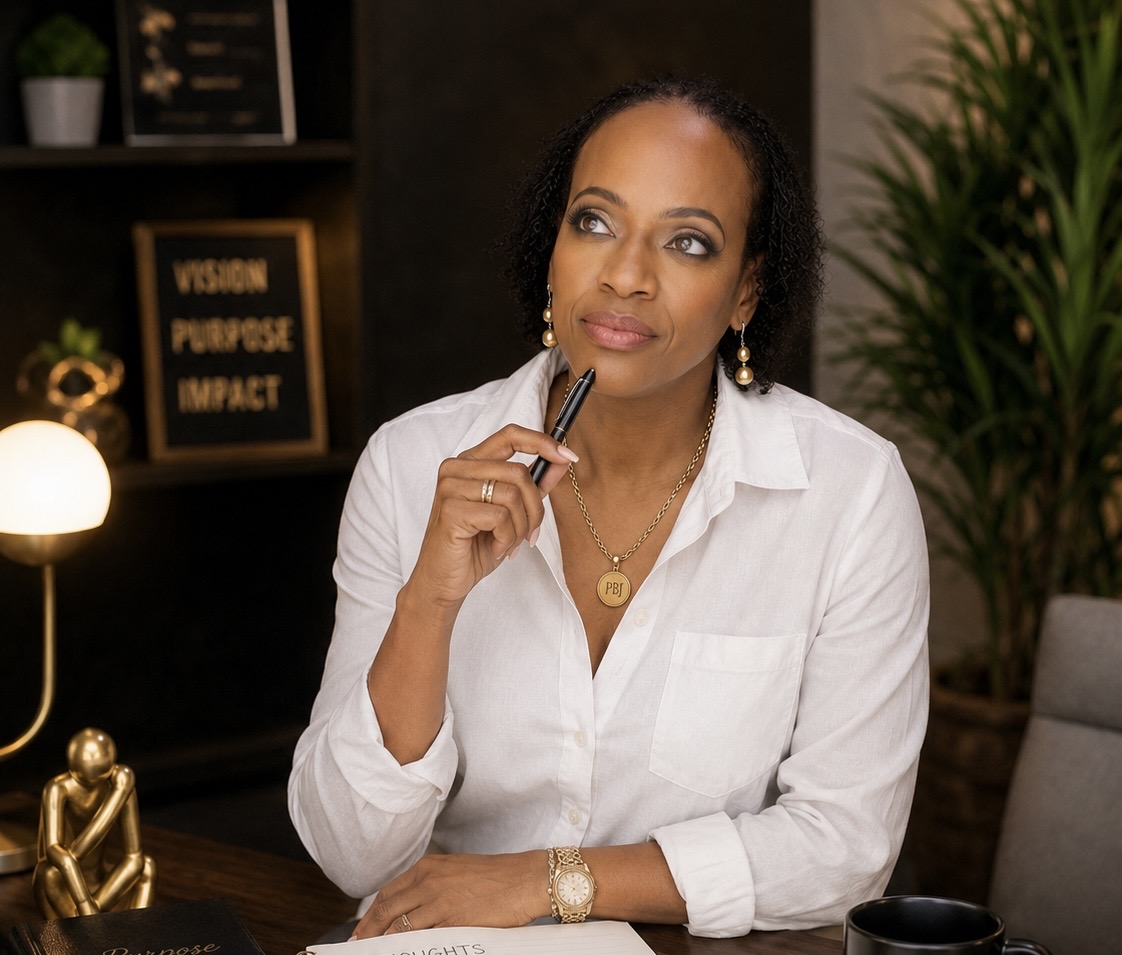
At some point, healing requires us to pause long enough to separate who we truly are from who we were conditioned to become.
Because we have carried labels that were never ours to carry.
Too emotional.
Too loud.
Too aggressive.
Too sensitive.
Too intimidating.
Too much.
But there is a difference between being difficult and being dismissed because our truth makes people uncomfortable.
There is a difference between being aggressive and refusing to remain silent while being overlooked, disrespected, or devalued.
There is a difference between being emotional and being human.
We were never too much.
We were carrying too much.
Too much pressure.
Too much responsibility.
Too much silence.
Too much unprocessed hurt.
Too many expectations.
Too many years of surviving without support.
And somewhere along the way, survival became identity.
But survival is not the same as freedom. We were not created merely to endure life while hiding pieces of ourselves to make others comfortable. We were created to live authentically.
To speak fully.
To heal honestly.
To rest without guilt.
To lead without apology.
To feel without shame.
To exist without constantly editing ourselves for acceptance.
And perhaps one of the greatest acts of healing is realizing some of the shame we carried was never proof that something was wrong with us. It was evidence of what happened around us, what was spoken over us, and what was repeatedly projected onto us.
So now the question becomes:
What would happen if we finally stopped viewing ourselves through the lens of survival, stereotypes, and shame?
What would happen if we started seeing ourselves through the lens of truth, wholeness, and worth?
Because healing is not becoming someone else. Healing is finally giving ourselves permission to become who we were before the world taught us to shrink.
We do not heal by pretending the shadows are not there. We heal by bringing them into the light.
I help high-functioning women uncover hidden shadows, reclaim their identity, renew their mindset, and walk boldly in purpose so they can shine.
Ready to stop carrying what you were never meant to keep?
Join the SHIFT Communityand begin your journey from shadows to shine.